Mulch calculators compared: the default depth changes your order
The depth a mulch calculator suggests moves your order far more than its math does. We checked four of them on October 6, 2026, and all four use the same formula: area times depth, converted to cubic yards or bags. A cubic yard covers 324 square feet at 1 inch deep, and a 2 cubic foot bag is 1/13.5 of a yard.
What each one suggests
| Calculator | Suggested depth | Extra suggested |
|---|---|---|
| Inch Calculator | 1 to 2 in fine, 3 to 4 in coarse | 10% |
| Omni Calculator | “about 2 inches” | None set, “buy some extra” |
| LawnStarter | 2 to 4 in for new beds | 10% for irregular edges, 20% for shredded bark |
| Lawn Love | 2 to 3 in for new beds | 10%, up to 20% |
Inch Calculator’s page was last modified March 8, 2023. LawnStarter and Lawn Love were both updated August 7, 2026. Omni’s page has no date.
Omni’s 2 inches sits at the bottom of what extension services recommend, and LawnStarter’s 4 at the top (our mulch depth guide has the full range and the reasons). A reader who trusts either default gets a very different order.
The math does have one small split. Inch Calculator and Omni count 14 bags of 2 cubic feet to a yard, while LawnStarter and Lawn Love use 13.5. That’s half a bag per yard, so on a bed under 2 yards it’s one bag at most. Ignore it.
Same bed, five answers
Take a 100 square foot bed, say 20 by 5 feet, and count 2 cubic foot bags at the depths and allowances these calculators suggest.
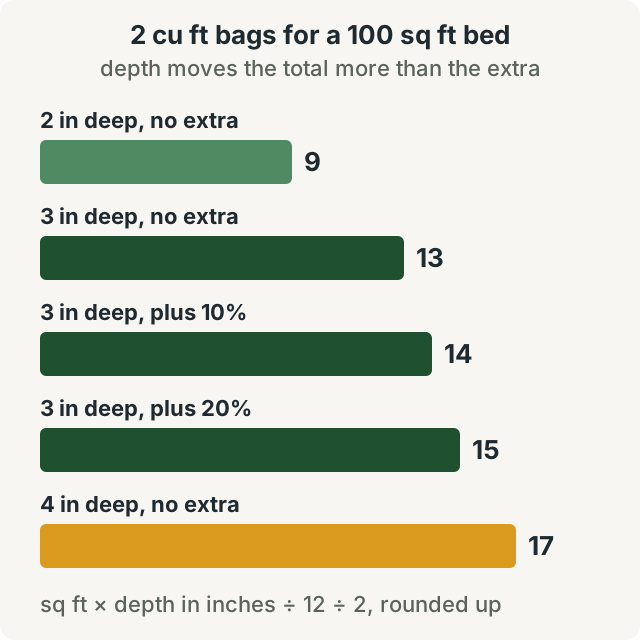
Going from 2 inches to 4 nearly doubles the order, 9 bags to 17. Going from no extra to 20% at 3 inches adds two.
Which depth to type in
Measure what’s already there first. LawnStarter and Lawn Love both say 1 to 2 inches is enough to refresh an existing bed. Push a ruler straight down to the soil, then enter only the difference. Topping up to about 3 inches total is where we’d aim.
Then match the material. Inch Calculator and LawnStarter both split their advice by texture: fine shredded mulch thinner, coarse bark or wood chips deeper. Straw and hay are the exception to everything above. LawnStarter says to spread 4 to 6 inches so you end up with about 2 once it settles.
How much extra
Inch Calculator and Lawn Love both recommend adding 10%, and LawnStarter suggests a 10% buffer for irregular edges and up to 20% for shredded bark, which compacts more. Lawn Love goes further for awkward beds and quotes two contractors: Leon Miller of BrushTamer in Plymouth, Indiana suggests 15% at minimum where there’s a grade change or mature tree roots, and JR Smith of H-Towne & Around Remodelers suggests 20% when filling around new deck footings. Treat both as judgment calls for those situations. Our mulch calculator defaults to 5% for a flat, ordinary bed and lets you raise it.

Put the size, the depth you actually need and your extra into the mulch calculator and it gives cubic yards plus 2 and 3 cubic foot bags. Filling a low spot before you mulch? The topsoil calculator takes the same inputs.