How thick should a concrete patio be?
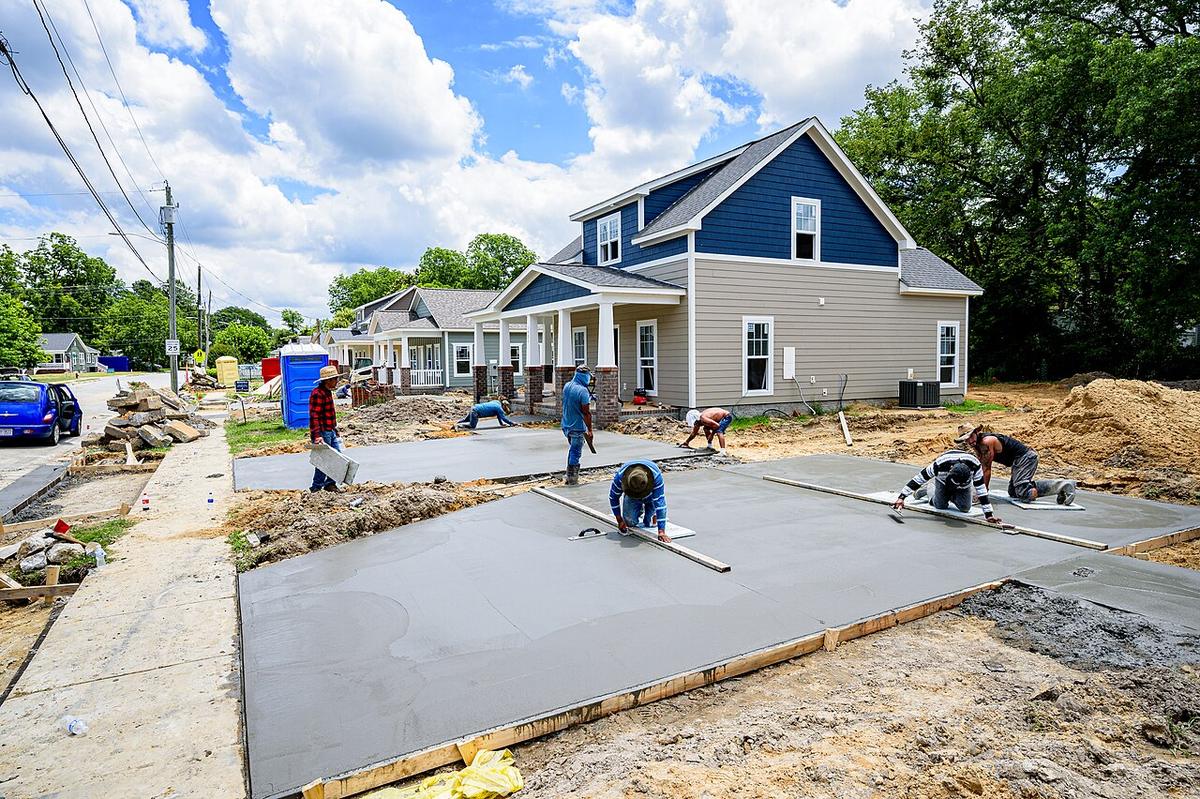
A patio that carries people, chairs and a grill should be 4 inches thick. That’s the general minimum Concrete Network gives for a patio. If the patio will hold a hot tub or an outdoor fireplace, go to 5 or 6 inches.
.jpg)
Patio thickness by use
| What the slab carries | Thickness | Source |
|---|---|---|
| Everyday use: people, chairs, a grill | 4 in (the general minimum) | Concrete Network |
| Hot tub, outdoor fireplace, other heavy loads | 5 to 6 in | Concrete Network |
| Quikrete’s DIY patio built with 2x4 forms | 3 1/2 in | Quikrete |
| Driveway for cars and SUVs | 4 in | Concrete Network |
| Driveway for trucks or RVs | 5 to 6 in, edges 1 to 2 in thicker | Concrete Network |
Quikrete’s 3 1/2 inches comes from its forms. It’s a lumber quirk: its patio project uses 2x4 forms, and a 2x4 is really 3 1/2 inches tall. If you want a true 4 inches, use taller forms.
What about the building code? The slab section of the residential code (R506 in the IRC-based codes, like the California Residential Code) sets 3 1/2 inches as the minimum for concrete floors on the ground. That section is written for floors inside buildings. Whether your patio needs a permit at all is a question for your local building department.
How much concrete each thickness takes
Say it’s 12 by 12 feet. These numbers come from the concrete calculator, and the last column adds 10% for spills, uneven ground and the bit left in the bag. That’s the allowance Duke City Redi-Mix, a ready-mix plant, suggests, and it’s our calculator’s default.
| Thickness | Exact volume | With 10% extra | 80 lb bags (with extra) |
|---|---|---|---|
| 4 in | 1.78 cu yd | 1.96 cu yd | 88 |
| 5 in | 2.22 cu yd | 2.44 cu yd | 110 |
| 6 in | 2.67 cu yd | 2.93 cu yd | 132 |
Going from 4 to 5 inches adds a quarter more concrete. On this patio that’s 20 more 80 lb bags, before the extra.
And 88 bags is about 7,000 pounds of dry mix, every bag lifted, poured and mixed by hand, so at close to 2 cubic yards it’s worth pricing a ready-mix truck before you buy bags. The 12 x 12 slab page has the same numbers, plus the weight and the ready-mix order rounded up to the quarter yard.
The base matters as much as the thickness
Concrete Network’s subgrade guide says the soil under a slab needs to give uniform support more than strong support. When one part settles more than another, the slab bends. Then it cracks.
The same guide calls for a base system at least 4 inches thick. Quikrete’s patio steps say to spread 5 inches of gravel and tamp it until it’s packed down to 4. The residential code also asks for a 4 inch base under indoor slabs that sit below grade, except on well-drained sandy or gravelly soil.
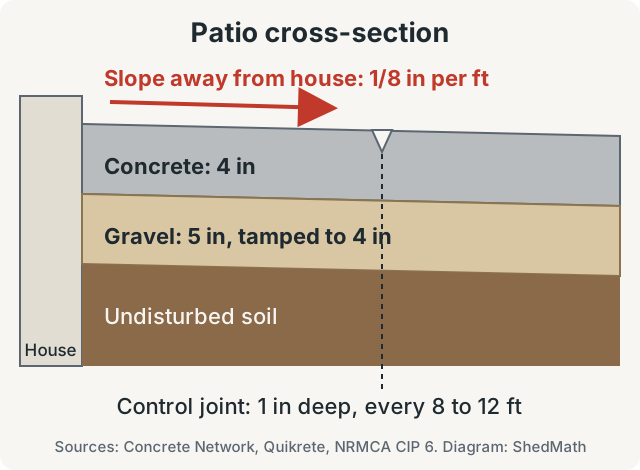
The gravel calculator works out the base in cubic yards and tons. Remember to measure the depth before tamping.
Control joints decide where it cracks
Concrete shrinks as it dries, and it will crack somewhere. Control joints are grooves cut or tooled into the slab so the cracks happen in a straight line at the bottom of the groove, where you won’t see them.
- Spacing: The NRMCA’s guide on joints (CIP 6, from the concrete producers’ trade group) sets the maximum at 24 to 36 times the slab thickness. Concrete Network says 2 to 3 times the thickness, in feet. For a 4 inch slab, both give 8 to 12 feet.
- Depth: NRMCA says at least a quarter of the thickness and never under 1 inch, and Concrete Network says the same 25%. So 1 inch on a 4 inch slab.
- Timing: NRMCA says saw cuts go in within 4 to 12 hours after finishing. Concrete Network warns that in hot weather the slab can crack if the joints aren’t cut within 6 to 12 hours.
On the 12 by 12 patio, one joint each way through the middle gives four 6 by 6 foot panels.
Slope it away from the house
Rain needs somewhere to go. Quikrete’s standard is 1/8 inch of drop per foot. Across 12 feet that’s 1 1/2 inches, enough for rain to run off instead of sitting in puddles or running toward the foundation.
Do you need rebar or wire mesh?
Concrete Network’s reinforcement page says rebar and mesh don’t stop cracks from forming. They hold cracks tight so they stay thin. The same page says that for many slabs on a well-compacted base, with joints at the right spacing, reinforcement isn’t needed. Its DIY patio page, on the other hand, says even small patios can benefit from it.
Quikrete goes another way and says fiber-reinforced crack-resistant concrete takes the place of wire mesh.
Our read: on a 4 inch patio with a well-packed base and joints at the spacing above, we’d skip the steel. If you want something anyway, fiber mix is the least work for a DIY pour, since there’s nothing to tie or hold up off the gravel.
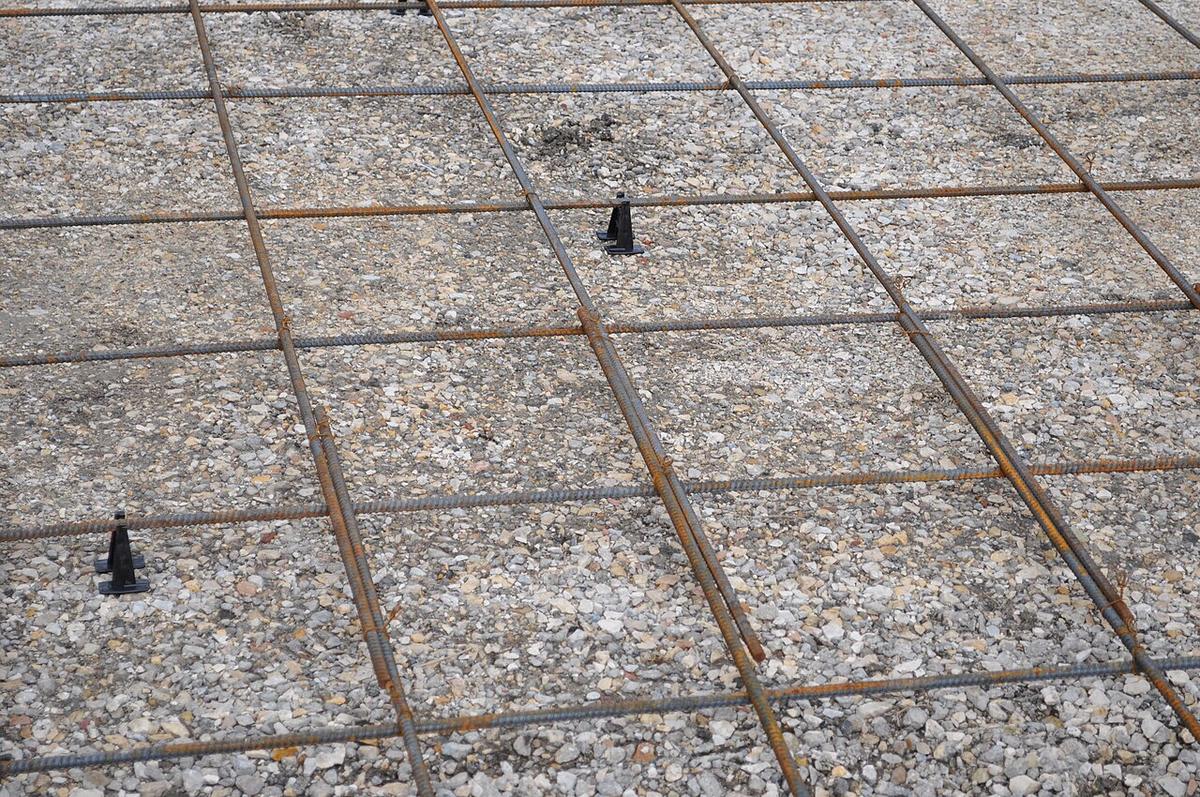

If you do use rebar, the rebar calculator counts bars, 20 ft sticks and tie points for your slab size.
Your shopping list
The concrete calculator gives the concrete and bag count for your exact size. If you’d rather have everything on one list (gravel, rebar or mesh, form boards, stakes) priced with your local numbers, the slab planner builds it.